General
Space Facts That Will Leave You Speechless: 7 Real Cosmic Threats
Written by Fatima Batool
September 28, 2026
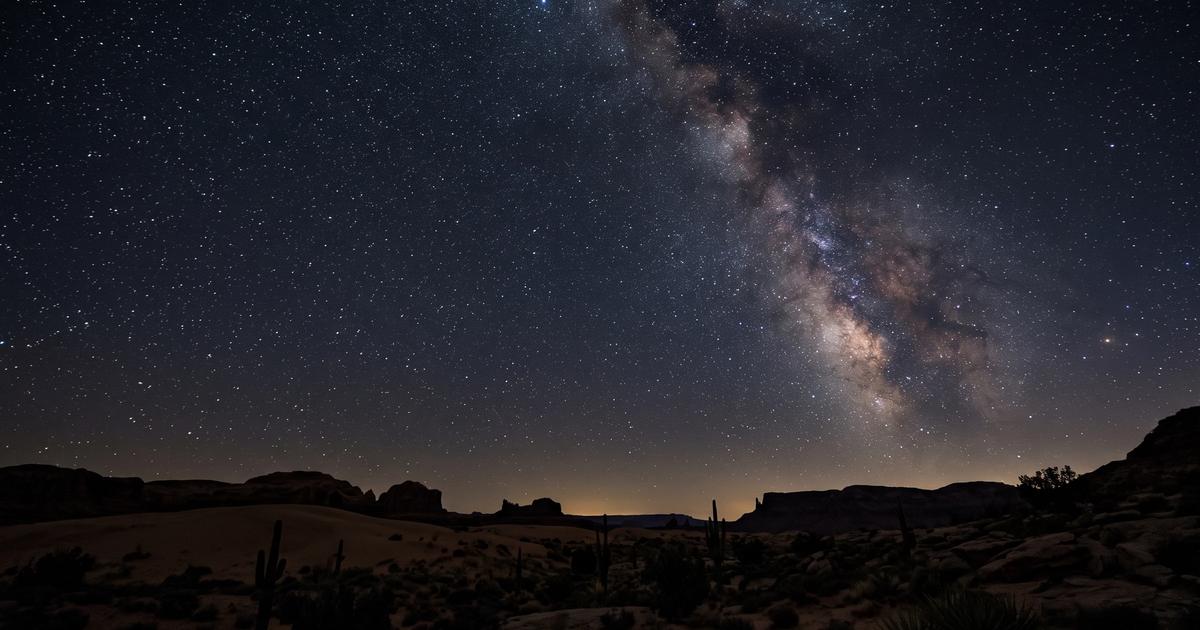
Space is often said to be "empty and quiet," but it is quite the opposite. There are violent events, invisible wanderers, and slow-moving disasters in the universe at scales that the human mind can't hold on to. All of these are true and tell us just how precarious our situation is.
Planets That Belong To No Star
Worlds Drifting Alone in the Dark
Today, astronomers think there are billions of planets in our galaxy without any star. They wander the galaxy without an orbit and without a sun, and they are not very bright themselves. A surprising population of free-floating objects in the Orion Nebula was discovered by a powerful space telescope in 2023, some of which are moving in pairs. This discovery was a surprise, because existing models cannot explain how two planets stay bound to one another without a star holding them together.
Why They Are So Hard To Spot
These worlds tend to barely reflect light and can only be detected when they pass in front of a brighter star. A rogue planet doesn't have to hit Earth to cause trouble. If it came into our solar system, its gravity alone would upset the orbits of the planets.
The Solar Storm That Set Telegraph Machines On Fire
What Happened in 1859
In 1859, a massive burst of solar plasma slammed into Earth's magnetic field. Electric shocks were given to telegraph operators, some machines continued to operate without power, and the northern lights could be seen as far south as the Caribbean.
What the Same Event Would Do Today
Such a storm today could damage transformers, knock out power grids across entire continents, and interfere with satellites, GPS, aviation, and communications for months. A comparable-sized solar eruption did happen in July of 2012 and missed Earth by only about 9 days. If we had been a little further along in our orbit, we would have been hit directly.
Stars Flung Out Of The Galaxy
A Cosmic Slingshot
Some stars move at more than one to two million miles an hour, so quickly that they can escape the entire galaxy. These hypervelocity stars are created when a pair of stars wanders too close to the giant black hole at the center of our galaxy. The black hole captures one star and shoots the other one outward at tremendous velocity.
The Uncomfortable Implication
If one of these stars passed through a solar system, its gravity could knock planets about like billiard balls. Because of its speed, there would be very little time between detecting it and having to deal with the consequences.
Earth's own defenses are just as fascinating, covered in Six Facts About Magnets That Sound Fake But Are Real.
A Burst From Halfway Across the Galaxy
The Power Of A Magnetar
A magnetar is a neutron star with a magnetic field a quadrillion times stronger than Earth's. One of them, about 50,000 light years away, released a tenth-of-a-second-long burst of energy in December 2004. That single burst carried more energy than our sun produces in about 250,000 years, and it was powerful enough to temporarily disrupt Earth's upper atmosphere from over halfway across the galaxy.
A Dying Star That Suddenly Went Dim
The Strange Behavior Of A Red Supergiant
The bright red star on the shoulder of the Orion constellation is nearing the end of its life. It faded in brightness by approximately two thirds in late 2019 and early 2020, causing astronomers to worry about an imminent explosion. It turned out to be a giant cloud of dust thrown off by the star, which blocked some of its light.
When It Finally Explodes
The star may explode into a supernova sometime in the next 100,000 years, or perhaps tomorrow. It is about 650 light years away, so it should not pose any direct threat, but it would be close enough to briefly outshine the full moon and stay visible during the day for weeks.
The Sun Has an Expiration Date
A Slow Warning Already In Motion
The sun is approximately 4.6 billion years old and is expected to use up its hydrogen fuel in about 5 billion years. However, difficulties begin long before that. The sun is getting brighter by about 10 percent every billion years, and in about a billion years it will be bright enough to cause a runaway greenhouse effect on Earth and evaporate its oceans. Then it will expand and become a red giant, possibly swallowing the inner planets.
The Universe Slowly Runs Out of Energy
The Long Road to a Cold Dark Void
Over inconceivable periods of time, all the stars will die, and even black holes will evaporate. About 100 trillion years from now, the last remaining stars should fade. What is left will be a cold, dark, virtually empty universe, close to absolute zero, where nothing will ever happen again. Unlike the other threats on this list, there is no known escape from this one.
My Honest Take After Reading All Of This
I used to think of space as the calmest of things: the night sky you look at and feel small in a comforting way. Reading these facts changed that for me. It didn't scare me, but it made regular things seem more valuable. A normal evening depends on a working power grid, a phone with GPS, and a lot of cosmic conditions that remain calm for now. That doesn't depress me, it motivates me. In such a violent, indifferent universe, it seems like the smart thing to do is to appreciate the relatively stable stretch of peace we actually get.
Why These Facts Matter
These events aren't likely to happen tomorrow, and most are very unlikely within a human lifetime. Yet together, they reveal a universe much more active than the restful night sky suggests. Learning about them isn't a matter of fright. It's about seeing our world as it is, a tiny, beautifully balanced place in a cosmos that is anything but.