General
Lightning Facts That Will Change How You See Every Storm
Written by Fatima Batool
September 28, 2026
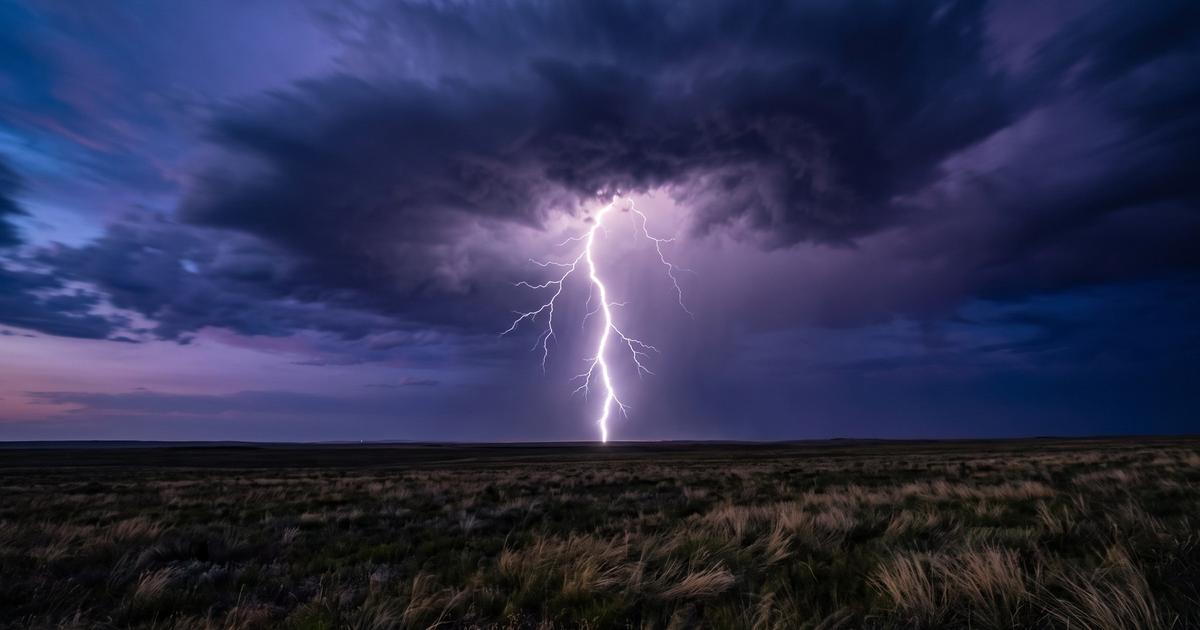
Lightning is a phenomenon that is familiar to almost everyone and that has caused fear for many. Few people know what takes place within a bolt. The true science is far more bizarre and extreme than most people realize: temperatures hotter than a star, strikes that travel upward, and effects on soil, air, and even human bodies. Each of these facts is documented by researchers, and together they show just how much is hidden in those few seconds of glaring light in the sky.
Lightning Is Hotter Than The Surface Of The Sun
The Real Temperature Of A Bolt
When lightning strikes, the air around it is superheated to approximately 30,000 kelvin. The surface temperature of the sun is approximately 6,000 kelvin, which makes a bolt about 5 times hotter. The heat vanishes almost as soon as it arrives, but in those milliseconds, the energy inside a bolt is unlike anything else that nature produces.
Why You Hear Thunder
This sudden heating makes the surrounding air expand outward so quickly that it produces a shockwave. That abrupt, loud crack of thunder is the shockwave arriving directly at us. The longer rolling rumble occurs when you are farther away and hear different portions of the long lightning channel at different times. Sound travels approximately 1 mile every 5 seconds, so counting the seconds between the flash and the thunder and dividing by 5 gives a rough approximation of how far away the storm is in miles.
Lightning Does Not Always Come Down
Bolts That Travel Upward
While cartoons always depict lightning falling from the sky, tall structures can do the opposite. When a nearby bolt changes the local electric field, a very tall structure concentrates that electrical stress at its tip and responds by launching a "leader" upward into the clouds. A well-known skyscraper is hit between 25 and 100 times a year, and many of those strikes are started by the building itself. The people inside rarely notice, because modern skyscrapers act like a protective cage, carrying the energy safely into the ground.
Lightning Can Fertilize the Soil
How a Bolt Feeds Plants
Nitrogen makes up approximately 78% of the atmosphere, but plants can't use it in its raw gas form. When a bolt heats the air, nitrogen molecules are split and the nitrogen atoms combine with oxygen. These compounds dissolve in falling rain and are absorbed into the soil as nitrates, which plants can use. Rainfall is not the only source of fixed nitrogen, as scientists estimate that lightning contributes up to 10 percent.
Shadows behave just as strangely during a storm, as covered in Shadow Facts That Will Change How You See Your Own Silhouette.
Lightning May Have Helped Create Life
Clues Hidden In Glass Tubes
Fulgurites are produced when lightning strikes sand or soil that contains a high concentration of silica, causing the heat to melt everything in its path and leave behind thin, branching tubes of glass. One researcher discovered a mineral called schreibersite in a sample. When this mineral comes into contact with water, it releases phosphorus, which is vital to DNA, RNA, and cell membranes. This supports the notion that repeated lightning strikes on the early Earth may have provided some of the first ingredients for life.
Lightning Can Reach Hundreds Of Miles In One Flash
The Rise of Megaflashes
Some horizontal bolts, now recognized as a distinct phenomenon thanks to satellite tracking, can cross storm clouds for hundreds of miles. In Brazil, one bolt in 2019 reportedly traveled 440 miles in one flash, while another traveled 477 miles across the southern United States. That's about the distance from New York to Detroit in a single flash.
Lightning Can Make You Sick Before a Storm Arrives
The Link to Headaches
A team of researchers at a large university found that people who experience chronic headaches were more likely to get one when lightning was active within approximately 25 miles. The increase was about 31 percent for headaches and 28 percent for migraines, and even people who rarely get headaches showed a smaller increase of about 23 percent. The effect appears before a storm is overhead and sometimes even before thunder can be heard. If you've always felt that bad weather made your migraines worse, you're probably not imagining it.
Lightning Exists on Other Planets
Storms Beyond Earth
Lightning isn't exclusive to Earth. Wherever there is a thick atmosphere, there is a good chance of lightning. It was first detected on Jupiter and Saturn before it was ever photographed, since the bolts sat underneath layers of thick clouds. Lightning on Saturn was first photographed by a space probe in 2009 during a months-long storm, and measurements at Jupiter indicate that its lightning bolts carry as much as 100 times the energy of a typical bolt on Earth.
What I Take From All Of This
I've never been fond of thunderstorms, mostly because of that loud crack. Learning that the crack is actually a shockwave created by air heated far beyond the sun's surface made me less jumpy and more fascinated. Now I even count the seconds between the flash and the thunder just to see how far away it is, which turns a scary moment into something almost calming. It's a small thing, but it changed something I used to dread into something I actually look out the window for.
Why These Lightning Facts Matter
Lightning links physics, chemistry, biology, and astronomy in one flash. It cleans and fertilizes, threatens and inspires, and it might even have helped begin life. The next time a storm rolls by, keep this in mind: there's a lot more going on in those few seconds than a loud noise and a bright light.