General
Why Is English Spelling So Confusing? The Real History Explained
Written by Fatima Batool
September 26, 2026
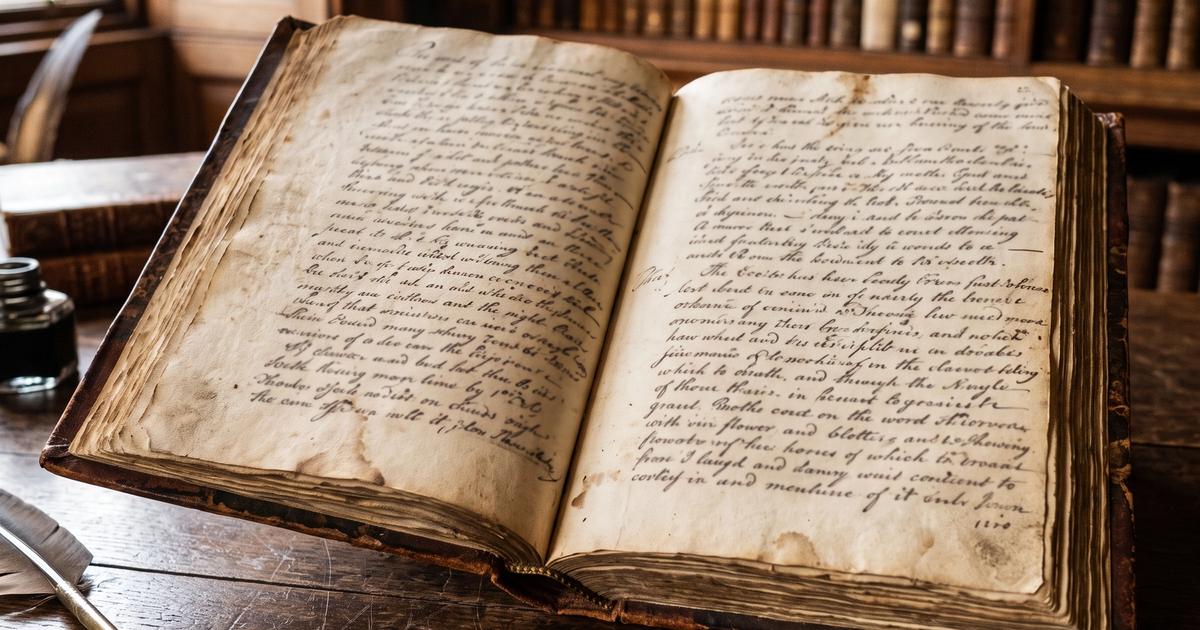
If you have ever had to teach a foreigner how to spell words in English, you've probably encountered the classic spelling example like "gh" uses the sound found in enough, "o" uses the sound found in women, and "ti" uses the sound found in action. It's a funny thing to say, but it's a true reflection of English, a language that often sets new rules for itself. But it's only because of a more or less chaotic line of historical events, nothing intentional.
How English Started As A Collision Of Languages
Germanic Roots And The First Written Form
English is derived from Germanic tribes, which invaded the British Isles over 1,500 years ago, and their different languages eventually combined to form Old English. Around 600 CE, Roman missionaries arrived and adapted the Latin alphabet to write the language down, adding some Germanic runes to represent sounds that weren't included in Latin.
French Takes Over, But English Survives
Things changed once more after 1066, when French-speaking invaders conquered England. French became the language of government and high society, while English was the language most people spoke day to day. Over generations, those descended from the French-speaking ruling class began speaking English too, though by then plenty of French words had already made their way into the language. The church and formal education also exposed many English speakers to Latin.
Why Nobody Agreed On How To Spell Anything
A Language Written Without Standard Rules
English resumed as a regular written medium in the mid-1400s, although by then no one had developed a consistent spelling system. Each writer drew on their own mix of influences, French vocabulary, Latin knowledge, and spoken English, leading to a wide variety of spellings for the same word.
The Printing Press Made The Problem Permanent
This became locked in place when the printing press arrived in England in 1476. Some of the people actually working the presses didn't speak English, and the manuscripts they were given to print already had wildly irregular spellings. Without any standardization, printers chose spellings somewhat randomly based on whatever version they encountered. The word for dough had many variant spellings and was originally pronounced closer to "dach," ending in a guttural Germanic sound the Latin alphabet had no letter for. That sound later came to be represented using the letters "gh." Over time, this guttural sound was dropped entirely in some words and pronounced as an "f" sound in others, which is why "dough" and "tough" look similar in print but sound completely different. These spellings were captured by the printing press at one particular moment in time, while pronunciation kept changing afterward. The same pattern applies to other now-silent letters, such as in "knife," "gnat," and "wrong," which still contain the written traces of sounds that used to actually be spoken.
Language isn't the only thing with a surprisingly recent origin, as shown in The Surprisingly Recent History Of The Passport.
The Great Vowel Shift Added An Entirely Separate Layer Of Chaos
Vowels Changed While Spelling Stayed Frozen
While printing was locking spelling in place, English pronunciation was simultaneously going through what linguists call the Great Vowel Shift, a change affecting many vowel sounds between the 14th and 18th centuries. What sounded like "bawt" shifted to sound like "boat," which displaced the word that used to be pronounced that way, pushing it into the "high u" vowel sound it uses today. Words that already used that high "u" sound often shifted into a diphthong, meaning two vowel sounds combined within a single syllable, so what had been pronounced "hus" became "house."
Why The Same Spelling Ended Up With Different Sounds
There's no clean explanation for this vowel shift, but it was influenced by the sounds already present in each word. "Tough" was originally closer to "tōh," "through" was closer to "thruch," and "dough" was closer to "dah," each starting from a different vowel sound that was then altered differently by the shift. These words all eventually settled on the "ou" spelling because of an inconsistently applied French spelling influence, which is exactly why words that look almost identical end up sounding very different.
A Personal Take On Learning This History
Frankly, I used to get frustrated helping a friend who was learning English as a second language, trying to explain why "though," "through," and "tough" didn't rhyme despite looking so similar in spelling. I didn't have a satisfying answer beyond "English is just like that." That changed once I learned the actual history. I don't think English spelling is broken or illogical, it's essentially a fossil record of invasions, printing errors, and pronunciation shifts that happened at different times and were never reconciled into a consistent system. Knowing that has made me a lot more patient with these inconsistencies now, because there's a real reason behind most strange spellings, even if that reason is "a Flemish printer guessed" or "the Great Vowel Shift hit this word differently."
What This Means For Anyone Learning English Today
None of this makes English spelling any easier to learn, especially for non-native speakers encountering these inconsistencies for the first time. But it does help explain why the frustration is justified rather than imagined. English spelling isn't inconsistent by accident or carelessness in any single moment, it's the result of Germanic roots, French political control, Latin scholarly influence, a printing industry staffed by non-native speakers copying unstandardized manuscripts, and a centuries-long vowel shift that changed pronunciation without ever changing the spelling to match. Knowing that history doesn't fix the spelling, but it does help explain how English ended up this way instead of the way it was ever meant to be.